
Every culture gives us definitions. It tells us what success looks like, what strength means, and what makes a life valuable. Culture also gives us definitions of ourselves: successful or unsuccessful, accepted or rejected, useful or unnecessary.
Some labels describe something true about us. But there is a difference between something being true about us and something being the final truth about us.
Paul wrote to Christians living in Corinth, a wealthy, diverse, religious and status-conscious city. They had come to Jesus, but they were still learning how much Jesus changes. They belonged to Christ, but they continued to carry Corinth’s definitions of success, freedom, spirituality and identity into the church.
Paul reminded them of what they had once been, but then grace interrupted their story:
“And some of you used to be like this. But you were washed, you were sanctified, you were justified in the name of the Lord Jesus Christ and by the Spirit of our God.”
—1 Corinthians 6:11
Their past was real, but grace had established a greater reality. The gospel does not pretend our past never happened. It declares that our past no longer has the right to name us.
Jesus does not merely improve the old life—he creates something new.
“Therefore, if anyone is in Christ, he is a new creation; the old has passed away, and see, the new has come!”
—2 Corinthians 5:17
New creation begins when Jesus moves from being an addition to our lives to becoming the centre of our lives. Because he died and rose again, we no longer live only for ourselves. His love reshapes how we see ourselves, other people and the purpose of our lives.
But God is not only creating new individuals. He is creating a new people.
Through the Spirit, we are joined together as the body of Christ. In that body, no one is unnecessary and no one is self-sufficient. We need people to carry us when we are struggling, but God has also given each of us something with which to carry others.
This new belonging also gives us a new mission. God reconciles us to himself through Christ and then entrusts us with the ministry of reconciliation. The reconciled become reconcilers. The people who have received grace become people who carry grace.
And what should characterize this new humanity?
Faith trusts the crucified and risen Christ. Hope looks toward the completion of God’s new creation. Love makes that new creation visible now.
We are not finally defined by what we were, what we possess, or what culture names us.
In Christ: new creation, new belonging, new people.
Watch the Live message Here
Humanity Redefined
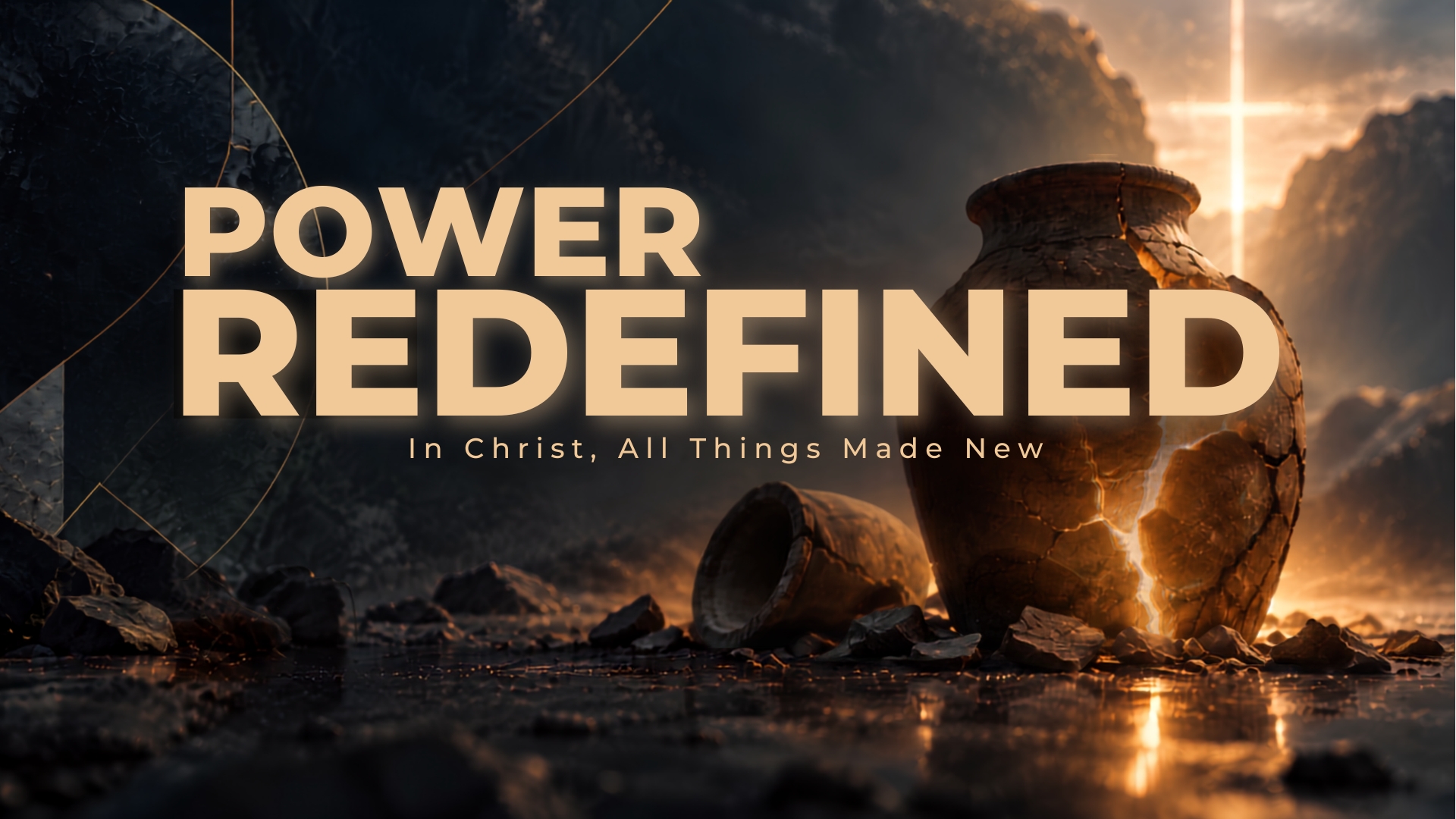
In the opening message of the Redefined series, Pastor Gary explores the new humanity God is creating through the crucified and risen Christ. Our past may explain part of our story, but it does not have the authority to define us forever. In Christ, we are washed, sanctified and justified. We receive a new identity, are joined by the Spirit to a new people, and are entrusted with a new mission. We are not finally defined by what we were, what we possess, or what culture names us. In Christ: new creation, new belonging, new people.