
Have you ever walked into a room where everyone seemed to know where they belonged except you?
People are already talking. They know the names, the routines, the history. You can find a seat, but that does not necessarily mean you feel like you have a place.
I think a lot of people experience church that way. Some wonder, Would they still welcome me if they knew my story? Others have been around for years but still feel as though no one would notice if they stopped coming.
When the apostle Paul wrote to the church in Corinth, he was writing to people who had found faith in Jesus but were still learning how to live together. Corinth was a busy, diverse city where status and reputation mattered. People paid attention to who spoke well, who had influence, and whose name carried weight.
Those habits followed people into the church.
Some said they followed Paul. Others preferred Apollos or Cephas. They had turned leaders into the names of competing groups. Paul’s response was startlingly direct: “Is Christ divided?” (1 Corinthians 1:13).
In other words:
How did a community gathered around Jesus end up pulling itself apart over the people who serve him?
The names have changed, but the instinct is familiar. We sort ourselves by politics, generation, income, background, and the people whose opinions we trust. Online, we can surround ourselves with voices that sound like ours. In person, we tend to gravitate toward people who make us comfortable.
Churches can do the same thing. We may not say, “I follow Paul,” but we can become deeply attached to a particular pastor, style of music, ministry, or way of doing things. Those preferences may have good reasons behind them. The trouble comes when they begin to determine whose voice matters and who feels welcome.
Paul brings the Corinthians back to what their leaders actually do. “I planted the seed, Apollos watered it, but God has been making it grow” (1 Corinthians 3:6). Both men had important work. Neither could create life.
I have seen how much it matters when someone recognizes the part another person could play. When I was about twenty, I was trying to understand whether God was calling me into pastoral ministry. I finally shared it with my pastor. He told me he had already seen it in me.
Part of me wanted to ask why he had not said something earlier! But I have never forgotten that conversation. He saw something I was only beginning to see. His encouragement helped me take the next step.
That is one way a community grows.
Someone notices. Someone speaks life. Someone else takes a step they might never have taken alone. We each have a part to play, even when we cannot see what the whole story will become.
Paul goes on to describe the church as a body. It has many parts, and those parts do different things. The foot cannot decide it does not belong because it is not a hand. The eye cannot tell the hand, “I don’t need you” (1 Corinthians 12:15–21).
Both of those thoughts can sound painfully familiar.
I don’t belong because I’m different.
I don’t need anyone else.
Perhaps you have felt the first one. You are new to faith, or you have questions you are afraid to ask. Maybe your life has been complicated, and you assume everyone else has it figured out. You see what others can do and wonder what you could possibly offer.
Paul’s answer is that a body needs more than one kind of person. Difference does not make you unnecessary.
Or perhaps you have learned to rely only on yourself. It can feel safer. You can attend, enjoy a service, and leave without anyone getting close enough to know when life is hard. But Paul describes a community where “if one part suffers, every part suffers with it; if one part is honoured, every part rejoices with it” (1 Corinthians 12:26). That kind of care asks us to let people know us, and to pay attention to them in return.
This is the part of church I want us to take seriously. At North Shore Church, Belong is one of our values. We have put that word on the wall because we want it to be true in the room. We want someone who feels invisible to be seen. We want people of different ages and stories to have room to grow and serve. We want to care when someone hurts and rejoice when something good happens to them.
We will have to keep choosing that. It is easy to ask, Do I like what I get here? Paul invites us to ask another question alongside it: Who has God placed beside me to love?
For me, the answer begins with Jesus. Paul does not ask the Corinthians to create a perfect community through goodwill alone. He reminds them that Christ was crucified for them. God gives the growth. The Spirit brings different people into one body.
If you are exploring faith, you do not need to have every question answered before you come to Jesus. You can bring him your questions, your past, and your hope for something new. The Christian claim is that his death and resurrection open the way to a new life—a life that changes both who we are and how we live with one another.
And if you already call this church home, perhaps your next step is close at hand. Learn someone’s name. Tell them what you see in them. Make space at your table. Reach out to a person you have missed. Let someone know when you need help.
Imagine a community where every person can say, “I belong here,” and hear someone else say, “I need you.” That is the kind of community I believe Jesus is growing among us.
Scripture: 1 Corinthians 1:10–17; 3:1–9; 12:12–27; 2 Corinthians 5:17
Watch the Live message Here
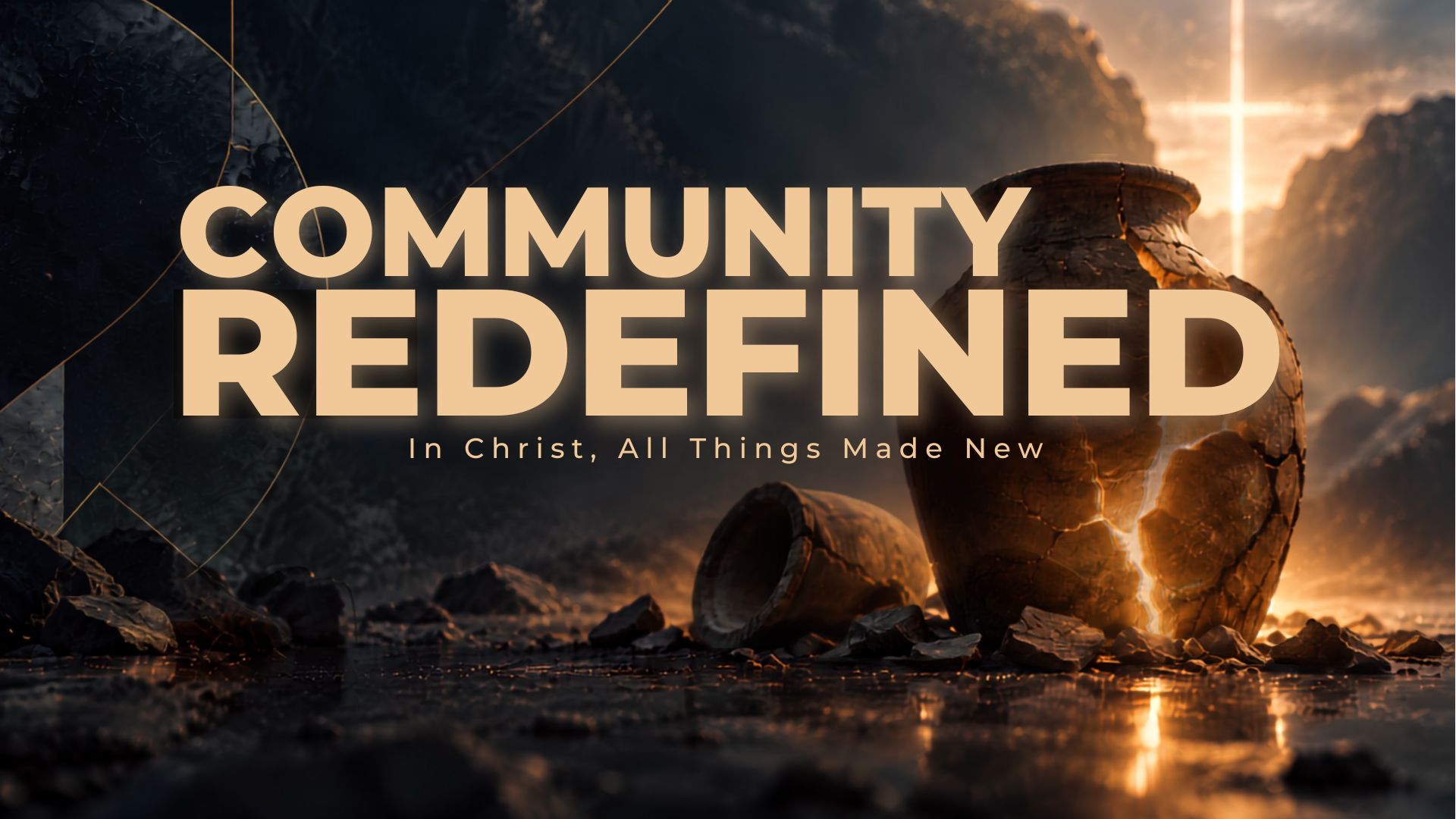
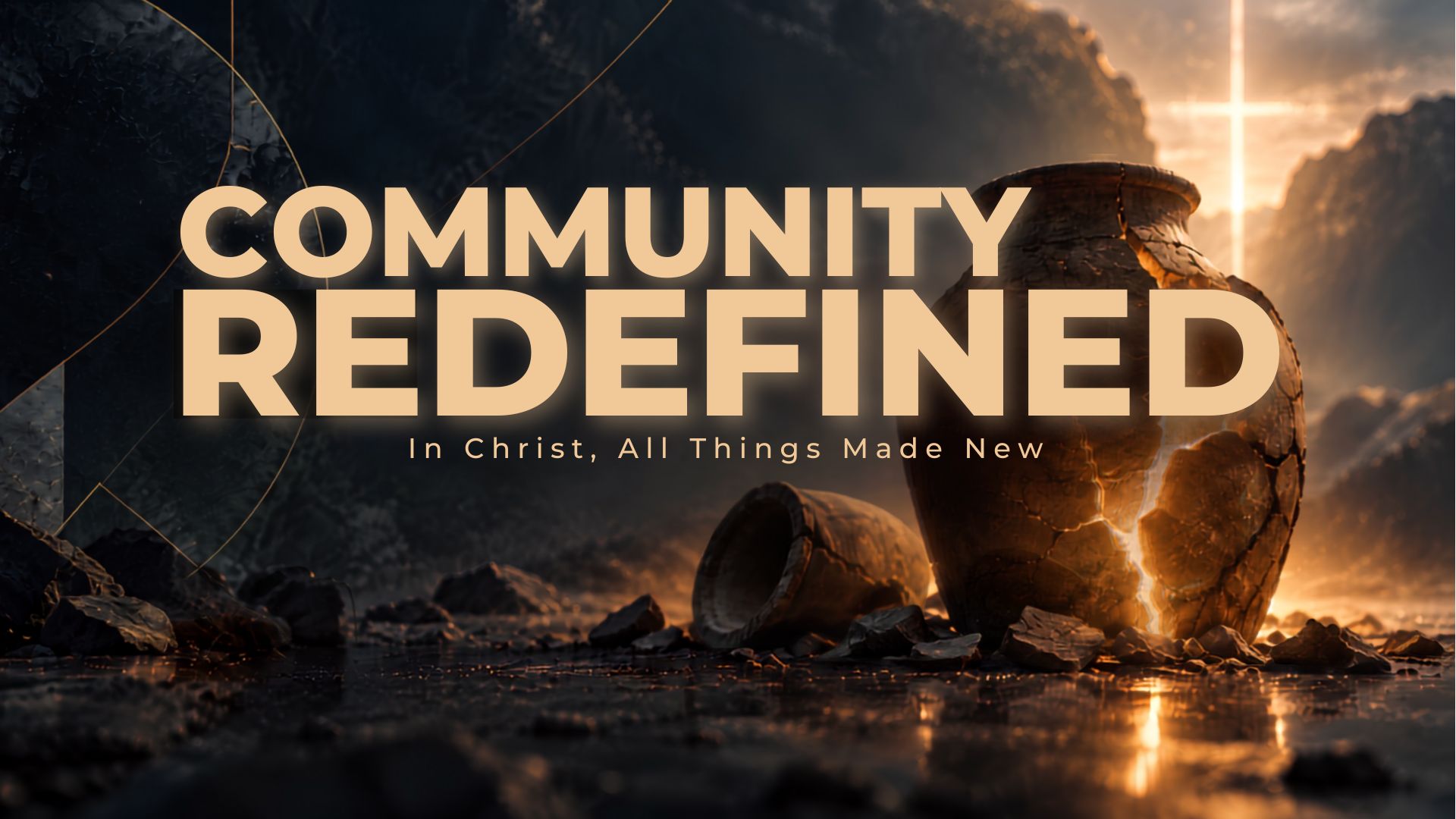
Community Redefined
What does it mean to belong to a church? In Community Redefined, we turn to Paul’s words to a divided church in Corinth. People were gathering around favourite leaders, questioning whether they had a place, and overlooking the people they needed. Paul calls them back to Jesus: God gives the growth, and one Spirit brings many different people into one body.
You have a place here, and your presence matters. Join us as we ask what it looks like to move beyond attending church and begin loving, serving, and growing together. If you’re exploring faith, the invitation begins with Jesus, who makes us new and gives us a people to belong to.
Scripture: 1 Corinthians 1:10–17; 3:1–9; 12:12–27; 2 Corinthians 5:17