
Why Can’t We Be Friends?
Living in Northern Ontario, you don’t have to travel very far to find yourself in the middle of nowhere. Sometimes you’re going fishing, hunting, or heading out to camp. And sometimes you listened to somebody who said, “Oh, there’s a shortcut.”
That’s how a twenty-minute drive becomes an afternoon and an insurance claim.
Before heading into the wilderness, one of the most important things you can do is tell somebody where you’re going and when you expect to return. If something happens, somebody needs to know where to look.
That raises a question worth asking about more than our next fishing trip: Who is looking for you?
Who notices when you’re missing? Who can hear you say, “I’m fine,” and recognize that you’re not? We can have a phone full of contacts and nobody we feel comfortable calling. People might know where we work, what we drive, and what we bought at the grocery store. But do they know where we really are?
David needed a friend, too
After David defeated Goliath, his story took an important turn. In 1 Samuel 18:1–4, Jonathan formed a deep friendship with David, made a covenant with him, and gave him his robe, tunic, sword, bow, and belt.
Jonathan was Saul’s son. David was the man God had anointed to become king. There was every reason for their relationship to become a competition. Yet Jonathan chose to love the person whose future would change his own.
“Jonathan could celebrate what God was doing in David, even when it changed what Jonathan expected for himself.”
We need that kind of friendship. We also need to become that kind of friend.
Created for connection
A 2021 American survey found that 15 percent of men reported having no close friends, compared with 3 percent in 1990. Women also experienced a decline in close friendships. Those are American findings, but the question reaches into our own communities: who do we actually have close to us? Source: Survey Center on American Life
The consequences matter. The U.S. Surgeon General’s 2023 advisory compared the mortality impact of lacking social connection to smoking up to fifteen cigarettes a day. This is a comparison of premature-death risk, rather than identical effects on the body. Friendship cannot cure every illness, but social connection matters deeply to our well-being. Source: U.S. Surgeon General’s advisory
God made us for relationship. David and Jonathan’s story helps us see six ways godly friendship strengthens our lives.
1. Navigation: We need help finding our way
“Where there is no [wise, intelligent] guidance, the people fall [and go off course like a ship without a helm], But in the abundance of [wise and godly] counselors there is victory.”
It is easy to give advice when somebody else is making the decision. Our own decisions feel more complicated because our feelings, history, fears, and desires are involved.
In 1 Samuel 20, Jonathan helped David navigate a dangerous situation. He discovered Saul’s intentions and used their agreed signal involving arrows to warn David that he needed to leave. Jonathan had information David could not access from his hiding place.
Sometimes friendship gives us that same gift: someone who can see what we are struggling to see.
“A good friend helps you see beyond what you feel.”
Technology can help us organize our thoughts, but it cannot replace a trustworthy person who knows us, listens carefully, and speaks truth with love. Find people who love Jesus, love you, and are willing to be honest.
Who do you invite into your decisions before they become consequences? Are you asking for advice, or shopping for agreement?
2. Celebration: We need people who can be happy for us
“Rejoice with those who rejoice; mourn with those who mourn.”
We recognize the value of a friend who stays close when life falls apart. But who can hear our good news without making us feel guilty for having it?
Jonathan acknowledged that David would become king and expressed his willingness to stand beside him. He made room for David’s future, even though it affected his own expectations (1 Samuel 23:16–17).
“Your friend’s blessing does not mean God has forgotten you.”
Celebrating someone else can be difficult when their answered prayer touches something we are still waiting for. We can bring that ache honestly to God and still choose to love our friend well.
Friendship also needs ordinary joy: a meal, a campfire, a story, and laughter. There is something good about being with people around whom we can relax and simply be ourselves.
3. Formation: We need people who help us grow
“As iron sharpens iron, so one person sharpens another.”
We like the idea of becoming sharper. We are sometimes less enthusiastic about the friction involved.
“Lord, make me more patient.” Then we get stuck on the phone trying to cancel a cable subscription. “Lord, I meant supernaturally.”
Much of our growth happens in ordinary relationships. We learn patience because somebody needs it. We learn humility because we have to apologize. We learn generosity because someone’s need interrupts our plans.
“Friendship gives us a place to practise what we say we believe.”
We can listen to a sermon about forgiveness, but eventually we have to forgive an actual person who actually did something. And we must remain teachable ourselves. We do not enter every relationship as the person God sent to fix everyone else.
Are the people closest to us helping us follow Jesus? Are we helping them do the same?
4. Intervention: We need people who will interrupt our drift
“Wounds from a friend can be trusted, but an enemy multiplies kisses.”
Formation is the ongoing work of growing together. Intervention is the moment someone says, “We need to talk about where this is going.”
In Galatians 2:11–14, Paul confronted Peter because his treatment of Gentile believers contradicted the truth of the gospel. Peter had walked with Jesus and preached powerful sermons. He still needed correction.
“None of us graduates from needing accountability.”
Drift can happen gradually. We become more secretive, bitter, or comfortable with something we once recognized as wrong. A faithful friend cares enough to ask difficult questions.
That never gives someone permission to humiliate, manipulate, or control us. Galatians 6:1 calls for gentle restoration. Healthy correction seeks our good and comes with humility.
Who can ask you a difficult question and get an honest answer?
5. Collaboration: We need people to serve alongside
Romans 16 reveals a whole community behind the ministry we associate with Paul: coworkers, faithful servants, people who took risks, and people who opened their homes. Paul had a calling. He also had coworkers.
Encouragement can help someone finish what they might otherwise abandon. Reflecting on C. S. Lewis’s support, J. R. R. Tolkien wrote, “The unpayable debt that I owe to him was not ‘influence’ as it is ordinarily understood, but sheer encouragement.” Tolkien credited Lewis’s persistent interest with helping him bring The Lord of the Rings to completion. Source: Tolkien’s letter to Dick Plotz, reproduced in A Pilgrim in Narnia
Apparently, even getting the ring to Mordor required a friend encouraging the author.
Who knows what someone might finish because you encouraged them?
At North Shore Church, we say, “Loving God, Loving You, Together.” That last word matters. Serving together makes room for our contributions and gives friendship somewhere to grow. Sometimes a lifelong connection begins while stacking chairs.
“You don’t have to carry the whole mission to make a meaningful contribution.”
Join a team. Take part in a group. Help with a ministry. Get to know the people serving beside you.
6. Invigoration: We need people who help us keep going
“Carry each other’s burdens, and in this way you will fulfill the law of Christ.”
When Job’s friends first arrived after his devastating losses, they sat with him in silence for seven days and nights (Job 2:11–13). Their later explanations went badly wrong, but their initial willingness to be present mattered.
As a pastor, I have been in moments when people looked to me for words and I had none. Sometimes words do not suffice. Presence does.
Bring a meal. Make the call. Sit beside someone. Follow up after the first week, when everyone else has returned to normal and their life still hasn’t.
David experienced that kind of friendship in the wilderness:
“And Saul’s son Jonathan went to David at Horesh and helped him find strength in God.”
Jonathan could not stop Saul’s pursuit or move David immediately onto the throne. But he could go to his friend and help him keep trusting God.
“You may not be able to change somebody’s circumstances, but you can help them face those circumstances with renewed faith.”
Who are you looking for?
The Survey Center on American Life reports that Americans who attend church regularly have more friends, on average, than those who attend rarely or never. That does not mean everyone in a congregation feels connected. It reminds us of the opportunity we have to build meaningful relationships. Source: Survey Center on American Life
“God sets the lonely in families…”
Psalm 68:6 — NIV, excerpt
Connection takes more than sitting in the same room. We have to make room in our lives, notice someone standing alone, and move beyond the same conversations with the same people.
If you feel lonely, that is not proof that something is wrong with you. People move. Relationships change. Grief reshapes our lives. Trust can take time to rebuild. You do not have to tell everyone everything, but you can take one honest step with a trustworthy person.
And at the heart of this message is an even greater truth: Jesus came looking for us. He came to seek and save the lost (Luke 19:10). He called His disciples friends and spoke of love that lays down its life for others (John 15:12–15). Through His death and resurrection, we can receive forgiveness and be brought into relationship with God.
As we receive His love, we learn to extend it.
Who knows where you really are? And who are you looking for?
This week, move from a good intention to an actual conversation. Invite someone for coffee. Tell a trusted friend something more honest than “I’m fine.” Follow up with the person who has been on your mind.
Let’s be people who go looking.
Watch this sermon here!
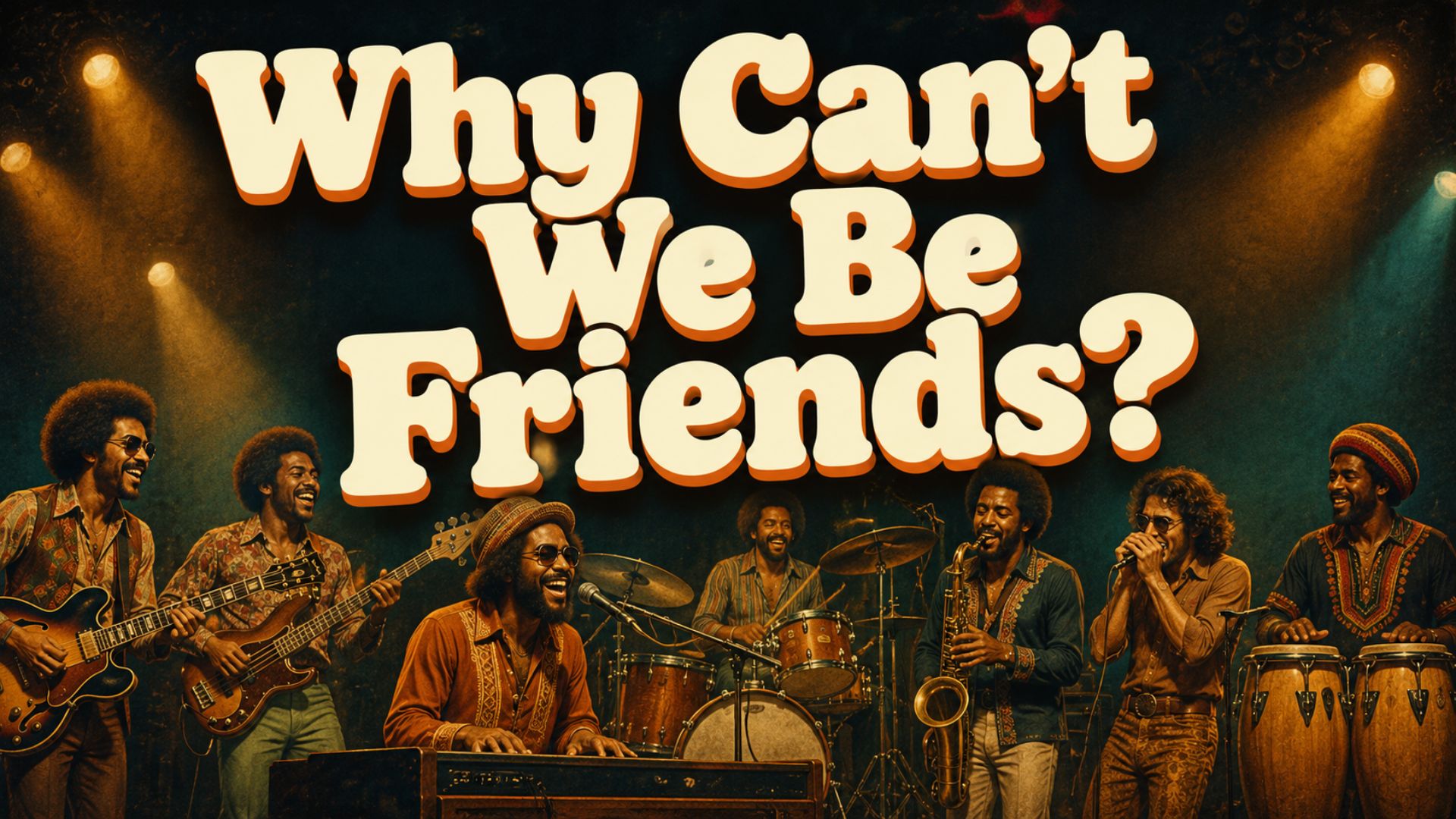
Why Can’t We Be Friends
Who knows where you really are—and who is looking for you? In this message, Pastor Gary Adduono explores the friendship between David and Jonathan to show why godly relationships matter. Even the man who defeated Goliath needed someone beside him to help him find strength in God.
Through six essential aspects of friendship—navigation, celebration, formation, intervention, collaboration, and invigoration—Pastor Gary considers how meaningful relationships help people make wise decisions, grow in character, share joy, and carry life’s burdens. With practical encouragement and relatable humour, this message challenges listeners to move beyond surface connections, let trustworthy people into their lives, and become friends who reach out to others.
God created His people for life together. Somebody needs to know where they really are—and somebody may be waiting for them to make the first move.